
Condition
Persistent dry eye disease
Dry eye disease happens when the tear film does not work properly. Tears are not just water. They contain a careful mix of oil, water, mucus, proteins and immune factors that protect the eye surface and keep vision clear between blinks.
- Treatment
- Four steps in one appointment
- Duration
- About an hour
- Targets
- Blocked oil glands and their cause
- Assessment
- In clinic, before treatment
Why reading is where you notice it
Dry eye can develop when the eyes do not produce enough tears, when tears evaporate too quickly, or when inflammation disrupts the ocular surface. A common contributor is meibomian gland dysfunction. These glands sit in the eyelids and produce oils that slow tear evaporation.
When the oil is poor or the gland openings are blocked, the tear film breaks up within seconds of each blink. Vision goes hazy, the eye stings, and bright light starts to glare. Blinking clears it briefly, and then it starts again.
Looking after your eyes
Reading and comfort
A healthy tear film is rebuilt with every blink, spreading a thin layer of oil that keeps the front of the eye smooth enough to focus cleanly.
When that layer breaks up, print softens and bright lights spread. Blinking clears it briefly, and then it begins again.
Looking after your eyes
Reading and comfort
A healthy tear film is rebuilt with every blink, spreading a thin layer of oil that keeps the front of the eye smooth enough to focus cleanly.
When that layer breaks up, print softens and bright lights spread. Blinking clears it briefly, and then it begins again.
Symptoms people describe
- Burning, stinging or grittiness
- Watery eyes from reflex tearing
- Vision that goes hazy between blinks
- Glare and halos around lights, especially at night
- Tired, heavy eyes by the end of the day
- Discomfort with contact lenses or screens
How we approach dry eye
Your assessment looks at the whole picture: tear film stability, eyelid and gland function, and how symptoms affect your day. That is what determines whether this treatment is likely to help you, or whether something else should come first.
Most persistent dry eye comes back to the oil glands in the eyelids. Drops alone replace the water but never fix the oil, so relief is short-lived. Our treatment works on the glands themselves and on the cause of the blockage, in four steps carried out in a single visit.
The four‑step treatment
Each step prepares the eyelid for the next. Use the buttons to see what happens to the eyelid margin and the oil glands at each stage.
Before treatment
A blocked, inflamed eyelid
The oil glands are capped and full of thick, stale oil. Debris and crusting build up along the lash line, the lid is red and inflamed, and Demodex mites live at the base of the lashes.
Simplified diagram. Two glands are drawn short throughout because gland loss is permanent: treatment restores flow in the glands you still have, it does not regrow ones that are gone.
How the light step works
- 1
Selected wavelengths
Red and near-infrared light is delivered to the eyelids in controlled doses. It does not cut, burn or remove tissue.
- 2
Into the eyelid
The light passes through the skin of the lid and reaches the oil glands sitting inside it, which drops alone cannot reach.
- 3
Energy and inflammation
Absorbed by mitochondria in the gland cells, it is used to treat mitochondrial dysfunction and calm the inflammation around the lid margin.
- 4
Softer oil, better flow
The lid is gently warmed, loosening thickened oil so the glands can be expressed properly in the next step of the treatment.
Common questions
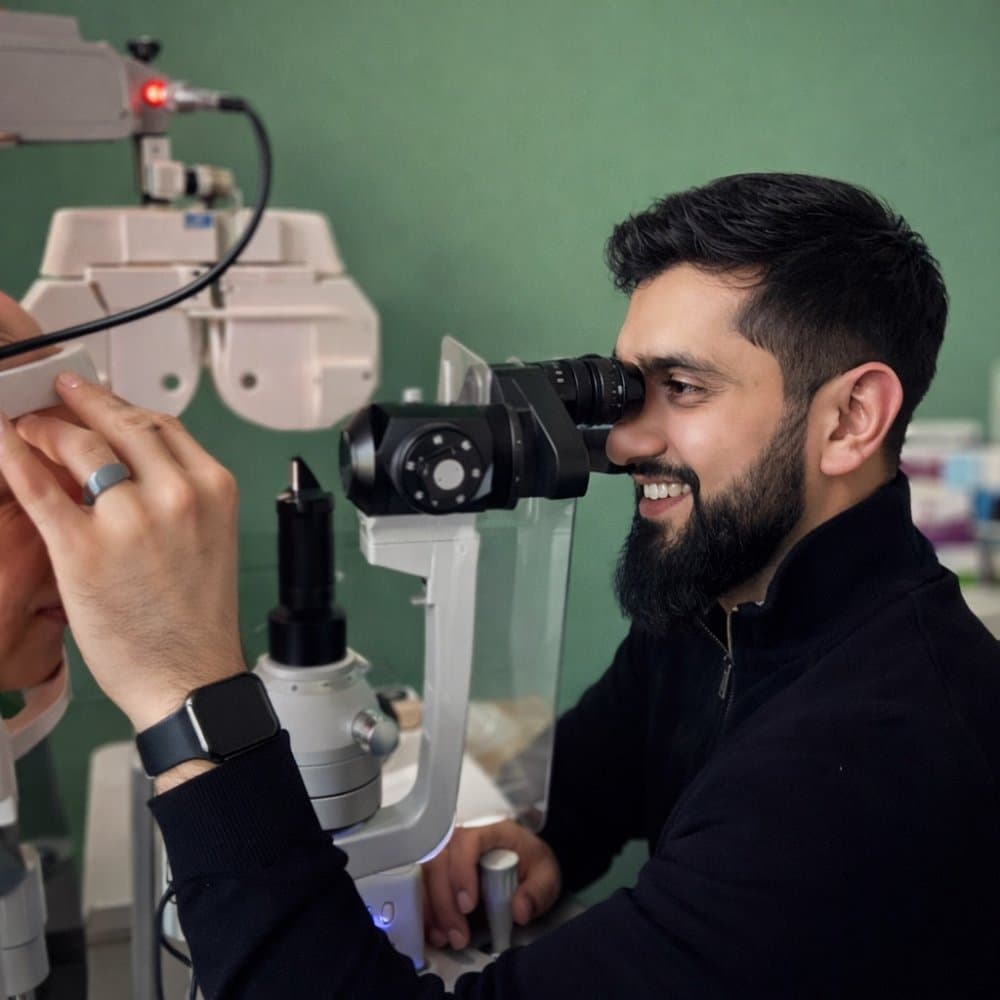
Your first and final assessments take place in a clinical setting, where the diagnostic equipment lives. That is what allows us to take detailed macular scans and compare them properly at the end of your course.
Ready to talk it through?
Every patient is assessed before treatment is discussed. If PBM is not right for you, we will tell you.
The information on this site is for general guidance only and is not medical advice. Diagnosis and treatment decisions should always be made with a qualified eye care professional. If your vision changes suddenly, seek urgent advice.