
What patients see
Disease Simulator
Two conditions, shown from the inside. Each one is drawn over a photograph rather than described, at every stage from healthy to advanced, because what a disease does to your sight is easier to recognise than to read about. Nothing here is a picture of any real patient.
What dry AMD does to your sight
Dry AMD takes the middle of your vision and leaves the edges alone. That is why it goes unnoticed for so long — the room stays clear, and only the thing you are actually looking at is lost. Move through the stages below, and move your pointer across the picture: the missing part follows wherever you look, which is the one thing a still photograph can never show you.
Move your pointer over the picture and the affected area follows it, the way it follows the eye in real life. On a phone, tap where you want to look.
A healthy macula
Detail, colour and contrast are all intact at the point you are looking at. This is the baseline everything below is measured against.
Read every stage described, without the picture
- A healthy macula
- Detail, colour and contrast are all intact at the point you are looking at. This is the baseline everything below is measured against.
- Early dry AMD
- Small deposits called drusen have formed under the retina. Sight tests as normal and most people notice nothing whatever. Some say they need more light to read than they used to, or that their eyes take longer to adjust coming in from outside.
- Intermediate dry AMD
- The deposits are larger and the pigment layer has begun to change. Contrast drains out of the centre of your vision: faces look washed out, and telling one shade from a similar one gets harder. Straight lines may start to bend. Reading in a dim room becomes difficult well before the letter chart changes.
- Geographic atrophy
- Patches of retina have been lost. A dense area now sits in the centre of your sight with a ragged edge, and because it is on the retina it moves with your eye — you cannot look around it. Letters disappear from the middle of words while the edge of the page stays sharp.
- Advanced geographic atrophy
- The atrophy now covers the centre of the macula. Whatever you look at directly falls inside the missing area. Faces cannot be made out, ordinary print cannot be read, and side vision is what remains for getting about — which it does well.
What this simulation cannot show you
The lost area is drawn dark here so that you can see it. People who have it more often describe grey, or blur, or simply not noticing anything is missing, because the brain quietly fills the gap in — which is a large part of why early disease goes unreported. The severity shown is typical of each stage rather than a measurement of any real person, and both eyes are rarely affected equally, so the better eye hides the worse one for a long time. If you want to know where you actually stand, this picture cannot tell you; an examination can.
If this has come on suddenly, do not wait
A new blank patch, straight lines that have suddenly started to bend, or a noticeable drop in central vision over days or weeks can mean wet AMD — the other form, which is treatable and where treatment is time-critical.
Contact your optometrist, your GP or your nearest eye casualty department the same day. That matters more than any appointment here.
What an assessment involves
Everything starts with an examination in clinic: your eyes are looked at properly, your history discussed, and you are told plainly what stage you are at and what that means.
If photobiomodulation is appropriate for you, it is explained then — including when it is not, which is an answer people are given here.
The information on this site is for general guidance only and is not medical advice. Diagnosis and treatment decisions should always be made with a qualified eye care professional. If your vision changes suddenly, seek urgent advice. What an assessment and treatment cost.
What dry eye does to your eyes
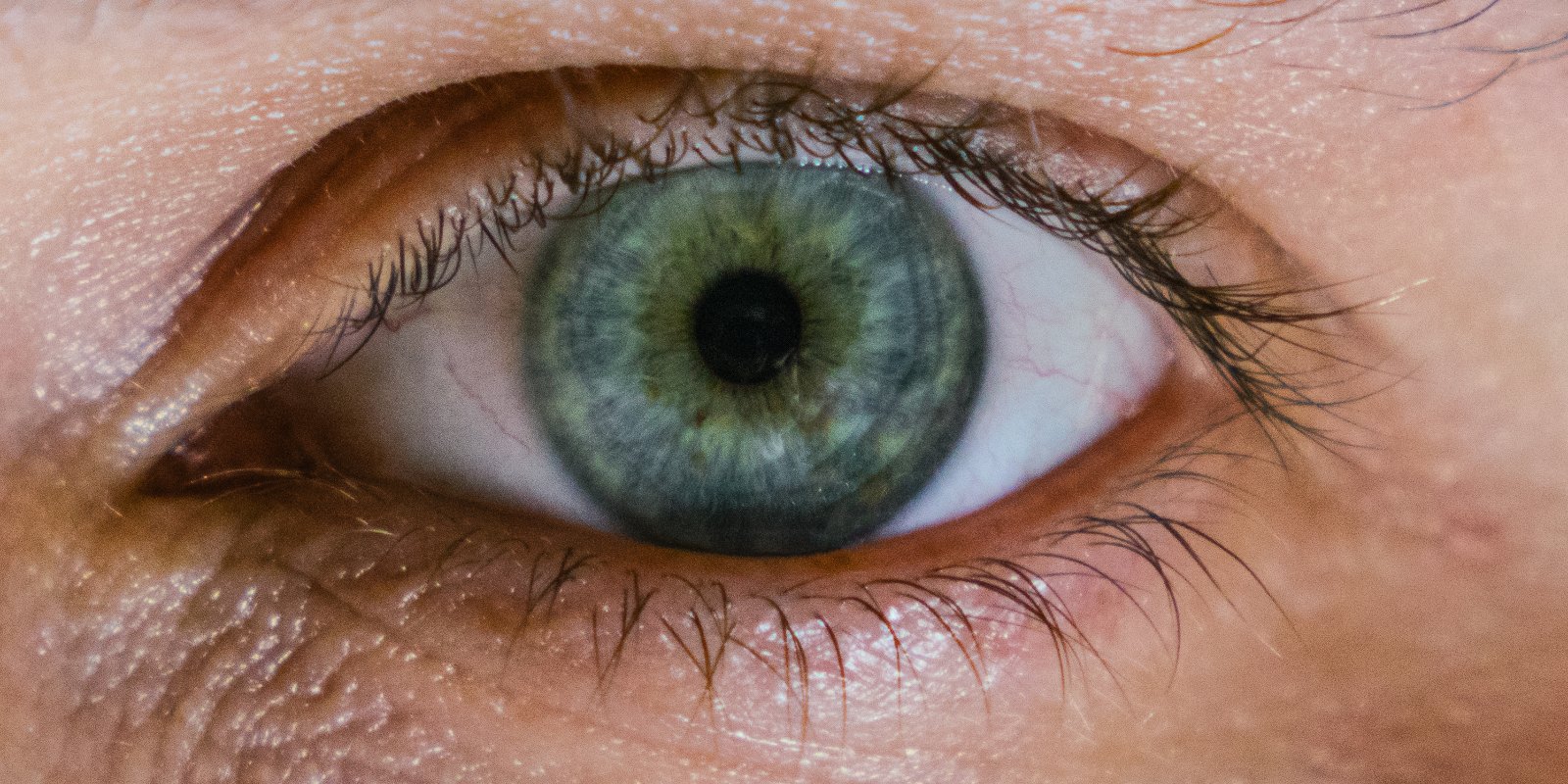
The commonest kind of dry eye is not a shortage of tears. The oil glands along the edge of the eyelids are blocked, so the watery tears underneath have nothing to hold them in, and they evaporate. The surface of the eye dries out and stings, and the eye answers the sting the only way it can — by making more tears, which run straight off for the same reason. That is why a dry eye is so often a watering eye. The picture below is split down the middle, healthy on the left and dry eye on the right, and the eye beneath it shows how red and how wet it gets at each stage.
Drag the divider to compare the two sides. Click or tap the picture to blink: the right-hand side clears for a moment and then hazes over again, which is all a blink does for a dry eye.
- Red and irritated
- Faintly pink
- Watering
- In wind or cold
The white of the eye is faintly pink, with a few fine vessels showing, and a little more moisture than usual sits along the lower lid.
Mild dry eye
By the end of the day the eyes feel tired and a little gritty, and they are faintly pink. Print softens now and then and clears with a blink. Wind, cold or a long stretch at a screen makes them water, and most people put it down to being tired.
The stage people put up with
Most people live with this for years before asking about it — drops help for a while, watering eyes seem the opposite of dry, and it never feels like an emergency. An assessment looks at the tear film and at the oil glands in the eyelids, and says what is actually driving it, which is what decides whether anything is likely to help for longer than the next bottle.
Read every stage described, without the picture
- Mild dry eye
- By the end of the day the eyes feel tired and a little gritty, and they are faintly pink. Print softens now and then and clears with a blink. Wind, cold or a long stretch at a screen makes them water, and most people put it down to being tired.The white of the eye is faintly pink, with a few fine vessels showing, and a little more moisture than usual sits along the lower lid.
- Moderate dry eye
- The eyes sting and feel gritty most days, the rims of the lids are red, and the whites are pink by the afternoon. Vision hazes over between blinks and clears again. The eyes water at a screen, in the wind, and often for no reason at all: the surface is dry, and the tears it makes in answer run straight off.The white of the eye is pink with the vessels clearly showing, the edges of the lids are red, and tears pool along the lower lid and now and then spill over.
- Severe dry eye
- The eyes are sore from the moment they open, red enough for other people to comment on, and they water so much that tears run down the cheek. Bright light is hard to bear, vision is hazy more often than it is clear, and a blink buys only a moment of sharpness. Screens, air conditioning and being outside are all difficult.The eye is red and inflamed across the whole of the white, the lids are red and thickened, and tears run over the lower lid and down the cheek.
- Severe dry eye with surface damage
- The surface of the eye has been left unprotected for long enough that it is damaged. The eye is painful rather than merely sore, red and swollen at the lids, and it streams. Vision no longer fully clears with a blink. The surface has to heal before vision will settle, and that takes more than the next bottle of drops.The eye is deeply red and angry-looking, the lids are swollen and red at their edges, and it streams constantly.
What this simulation cannot show you
Dry eye is felt as much as seen. The stinging, the grittiness and the heaviness by evening are not in this picture, and for many people they are the worst of it. The eye drawn here is typical of each stage rather than a measurement of anyone's, and the two eyes are often different — one may stream while the other is merely sore. Where you actually stand takes a few minutes with a slit lamp, not a picture.
If your eye is painful, red or suddenly worse, do not wait
Dry eye is uncomfortable, but it is not sudden. A painful red eye, marked sensitivity to light, a sudden drop in vision, or any of those in a contact lens wearer can be an infection or an ulcer on the surface of the eye, which is treatable and needs treating the same day.
Contact your optometrist, your GP or your nearest eye casualty department today. That matters more than any appointment here.
What an assessment involves
The assessment looks at the tear film and at the oil glands in the eyelids that are behind most persistent dry eye, at the surface of the eye itself, and at how the symptoms affect your day.
If the four-step treatment is appropriate for you, it is explained then — including when it is not, or when something else should come first.
The information on this site is for general guidance only and is not medical advice. Diagnosis and treatment decisions should always be made with a qualified eye care professional. If your vision changes suddenly, seek urgent advice. What an assessment and treatment cost.