
Condition
Dry age-related macular degeneration
Age-related macular degeneration affects the macula, the central part of the retina used for sharp, detailed vision. This is the vision needed for reading, recognising faces, driving and seeing fine detail.
- Treatment
- Photobiomodulation only
- Each session
- About 12 minutes
- Course
- 9 home sessions over 3 weeks
- Assessment
- In clinic, before and after
What we ask you to look for
Dry AMD is the more common form. It develops gradually as retinal cells and supporting tissues age and become less efficient. Waste deposits called drusen can build up beneath the retina. Over time, some people develop areas of retinal thinning, known as geographic atrophy.
Dry AMD does not usually cause complete blindness because side vision often remains. Even so, the impact can be serious. Losing central vision can make familiar tasks tiring or unsafe.
Symptoms people describe
- Blurred or fuzzy central vision
- Difficulty reading small print, even with glasses
- Distorted or missing areas in central vision
- Slower adjustment between bright and dim spaces
- Colours appearing less vivid than they used to
- Needing more light for close work
How we approach dry AMD
Every patient is assessed before any treatment is discussed. Your assessment includes vision testing and detailed macular scans where appropriate, so that any change over your treatment course can be measured rather than guessed at.
Where photobiomodulation is suitable, it is the only treatment used. Each home session takes around 12 minutes, and the aim is to support the cells at the back of the eye that matter for your sight. PBM is not a cure for AMD and it cannot restore vision that has already been lost. It is one part of a wider plan that still includes regular eye examinations and prompt referral if anything changes.
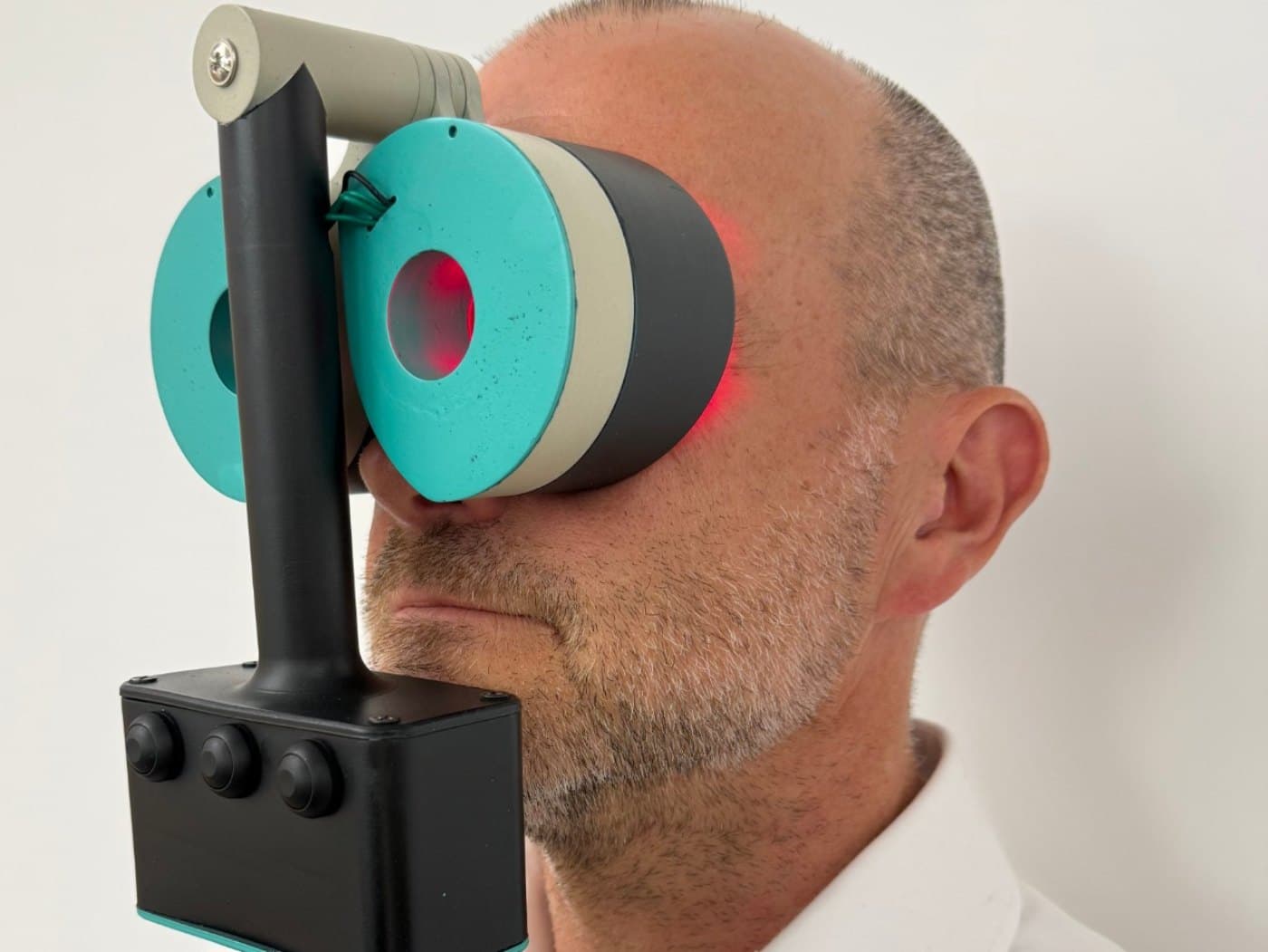
How the treatment works
- 1
Selected wavelengths
Red and near-infrared light is delivered in controlled doses. Unlike a surgical laser, it does not cut, burn or remove tissue.
- 2
Absorbed by the cell
The light reaches the mitochondria, the structures that produce most of the energy a cell needs to function.
- 3
Energy and inflammation
Research suggests certain wavelengths interact with cytochrome c oxidase, part of the mitochondrial energy pathway.
- 4
Supported tissue
The aim is not to boost cells in a vague sense. It is to help stressed cells work more normally and resist further damage.
Common questions
Your first and final assessments take place in a clinical setting, where the diagnostic equipment lives. That is what allows us to take detailed macular scans and compare them properly at the end of your course.
Ready to talk it through?
Every patient is assessed before treatment is discussed. If PBM is not right for you, we will tell you.
The information on this site is for general guidance only and is not medical advice. Diagnosis and treatment decisions should always be made with a qualified eye care professional. If your vision changes suddenly, seek urgent advice.