18 August 2026 · 11 min read
PBM for Dry AMD and Dry Eyes: Latest Research, Benefits, and Future Directions
A treatment that uses light to support damaged eye tissue can sound almost too simple. Yet photobiomodulation, often shortened to PBM, has become one of the more closely watched non-invasive options in eye care research.
For dry age-related macular degeneration, the aim is to protect retinal cells and slow functional loss. For dry eye disease, the aim is different but related: calm inflammation, improve tear film quality, and support the glands and surface tissues that keep the eyes comfortable.
PBM is not a cure for either condition. It is not a replacement for regular eye examinations, medical treatment, or urgent care when vision changes suddenly. Still, the research is moving quickly enough that it deserves a clear, balanced look.
This article is for general information only and should not be taken as medical advice. Anyone considering PBM should speak with an optometrist, ophthalmologist, or other qualified eye care professional.
Dry AMD affects central vision and daily independence
Age-related macular degeneration affects the macula, the central part of the retina used for sharp, detailed vision. This is the vision needed for reading, recognising faces, driving, watching television, and seeing fine detail.
Dry AMD is the more common form. It develops gradually as retinal cells and supporting tissues age and become less efficient. Waste deposits called drusen can build up beneath the retina. Over time, some people develop areas of retinal thinning, known as geographic atrophy. Symptoms often include:
- Blurred or fuzzy central vision
- Difficulty reading small print
- Distorted or missing areas in central vision
- Slower adjustment between bright and dim spaces
Dry AMD does not usually cause complete blindness because side vision often remains. Even so, the impact can be serious. Losing central vision can make familiar tasks tiring or unsafe. The emotional effect can also be heavy. People may avoid hobbies, driving, or social situations because vision feels unreliable.
Dry eye disease is more than occasional irritation
Dry eye disease happens when the tear film does not work properly. Tears are not just water. They contain a careful mix of oil, water, mucus, proteins, and immune factors. This film protects the eye surface and keeps vision clear between blinks.
Dry eye can develop when the eyes do not produce enough tears, when tears evaporate too quickly, or when inflammation disrupts the ocular surface. A common contributor is meibomian gland dysfunction. These glands sit in the eyelids and produce oils that slow tear evaporation.
Dry eye can affect work, reading, screen use, sleep, and mood. Symptoms may seem small from the outside, but chronic discomfort can wear people down. Many people cycle through drops, warm compresses, lid hygiene, and prescription treatments before finding a plan that helps.
What photobiomodulation actually does
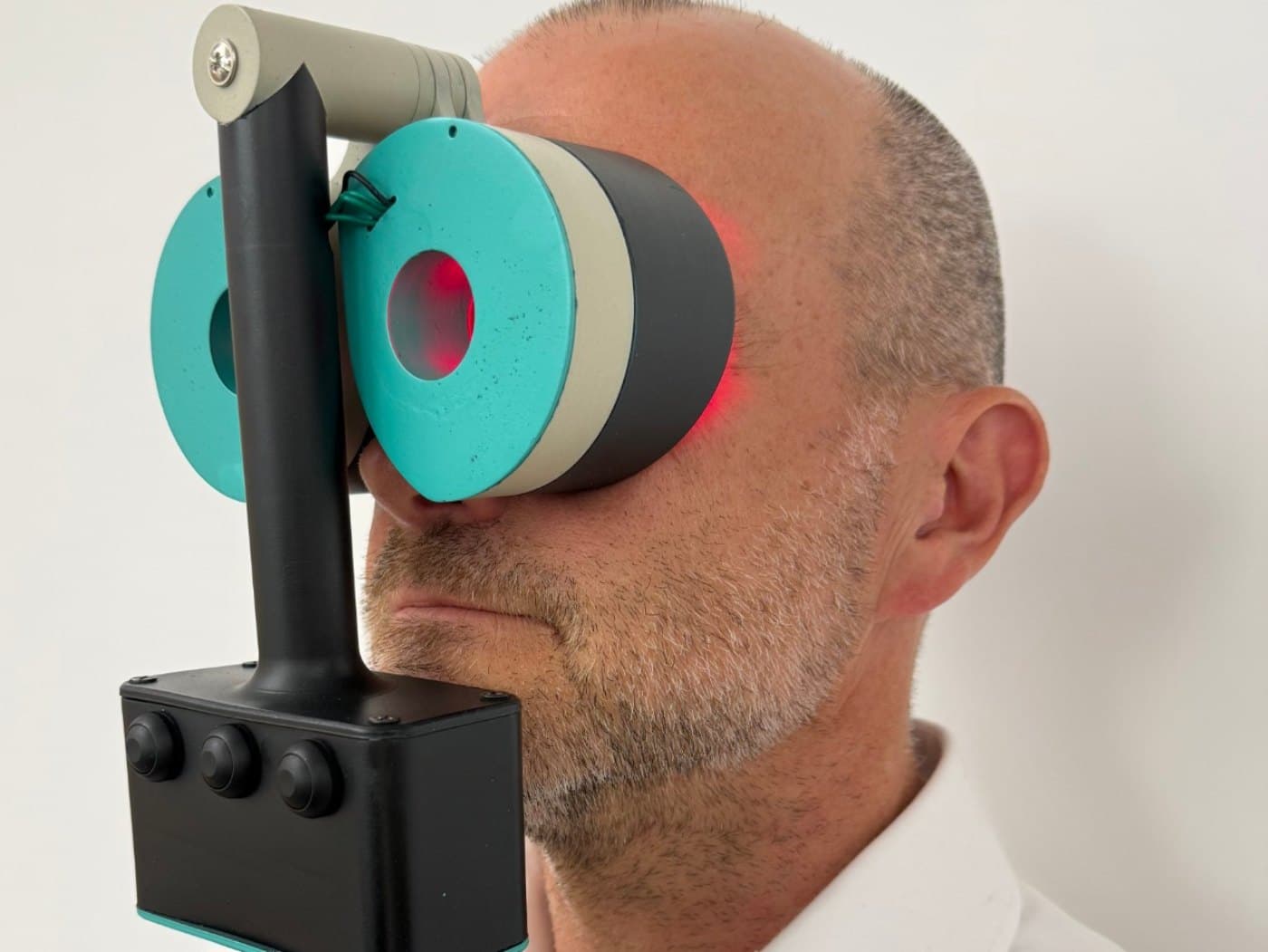
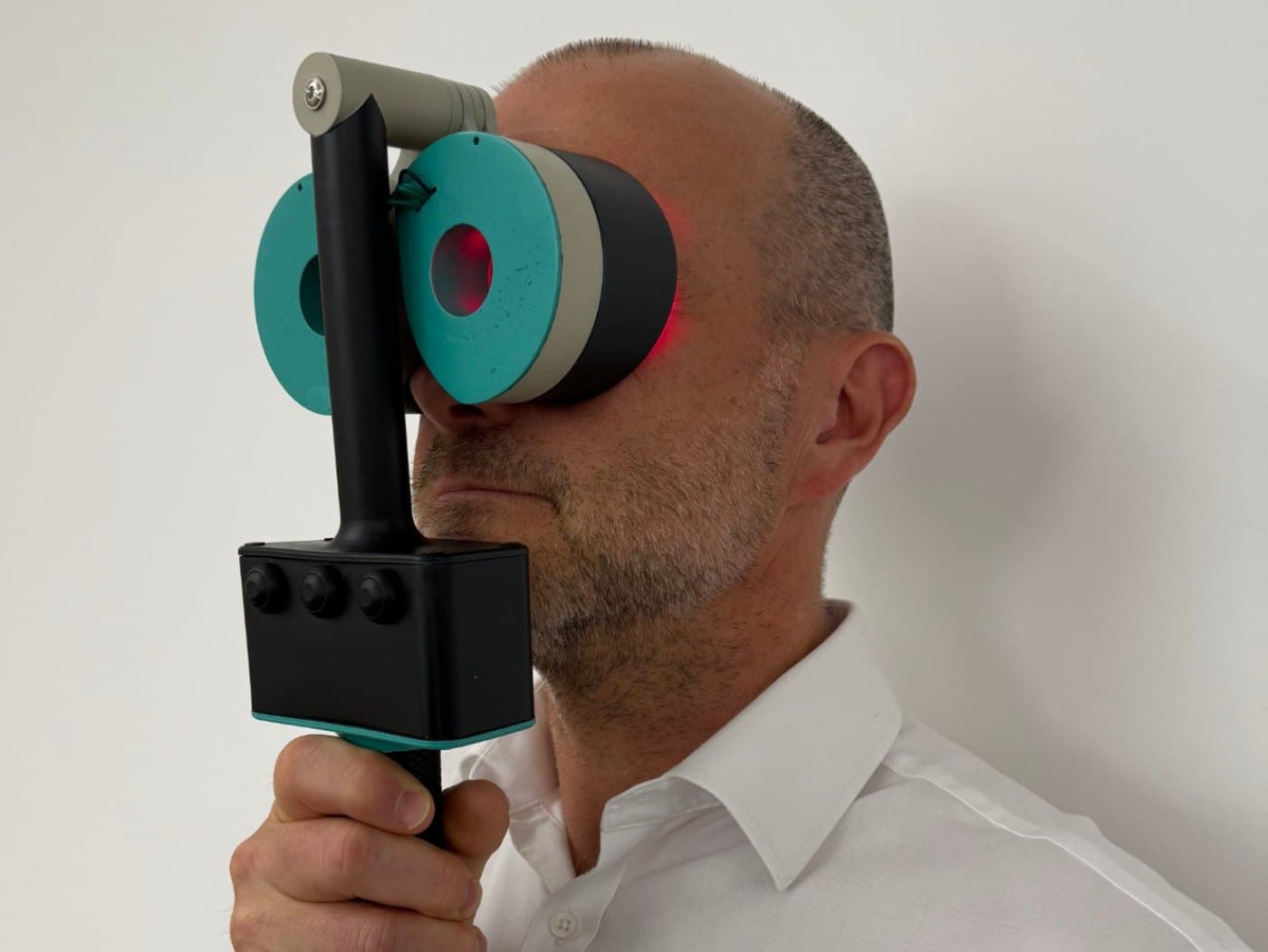
Photobiomodulation uses specific wavelengths of visible and near-infrared light. Unlike surgical lasers, PBM does not cut, burn, or remove tissue. It uses low-level light energy to influence cell activity. Treatment is typically delivered through a specialised medical device, and patients should not assume that consumer red light lamps are equivalent to medical PBM.
The main biological target discussed in PBM research is the mitochondrion. Mitochondria produce much of the energy cells need to function, and retinal photoreceptors have very high energy demands. A key molecule often mentioned is cytochrome c oxidase, part of the mitochondrial energy pathway. Certain wavelengths of light appear to interact with this enzyme.
The goal is not to boost cells in a vague sense. The aim is to help stressed cells work more normally and resist further damage.
What recent research says about PBM for dry AMD
The strongest eye care research for PBM has focused on dry AMD. Several clinical studies, including named trial programmes such as LIGHTSITE, have explored PBM for people with early to intermediate dry AMD. Across these studies, researchers have reported encouraging signals, including improvements in visual acuity compared with sham-treated groups, and improvements in contrast sensitivity and low-luminance vision.
Visual acuity is the familiar letter-chart measure, but it does not capture everything. A person may read the chart reasonably well and still struggle in dim restaurants, cloudy weather, or low-contrast settings. That is why contrast sensitivity and patient-reported function are useful outcomes. The overall message from recent dry AMD research is cautiously positive:
- Some treated groups have shown modest improvements or better stability than control groups
- Improvements in contrast sensitivity have been reported in some studies
- Some signs of reduced drusen burden or slowed change have been observed
- Treatment has generally appeared well tolerated in controlled studies
- More follow-up is needed to understand durability and progression risk
A key limitation is that not all dry AMD is the same. Early dry AMD, intermediate dry AMD, and geographic atrophy may respond differently. A therapy that helps stressed but living cells may have less effect once tissue has already been lost. This is why patient selection matters.
What recent research says about PBM for dry eyes
The dry eye evidence base is growing, though it is less mature than the dry AMD research. Studies have explored PBM alone and in combination with other treatments, including intense pulsed light, warm compresses, and meibomian gland therapies.
Many dry eye studies focus on meibomian gland dysfunction because poor gland oil flow is a major cause of evaporative dry eye. PBM may support the glands by reducing inflammation around the eyelids and improving tissue metabolism. Some studies also report reduced reliance on artificial tears after treatment courses.
The main caution is that dry eye trials vary widely. They use different devices, treatment schedules, wavelengths, and outcome measures. Some have small sample sizes. Some combine PBM with other therapies, which makes it hard to know how much benefit comes from PBM itself.
Safety and realistic expectations
PBM is usually described as non-invasive and comfortable. A typical treatment session may involve sitting in front of a light delivery device while the eyes receive controlled exposure. Protocols differ, but treatment often involves a short course of repeated sessions rather than a single appointment.
The honest position is that PBM is promising and worth considering for the right patient, after a proper assessment. It is not a cure, results vary between people, and it belongs inside a wider plan that still includes regular monitoring.
Considering an assessment?
Every patient is assessed before treatment is discussed, and we will tell you if photobiomodulation is not right for you.
Arrange an assessment