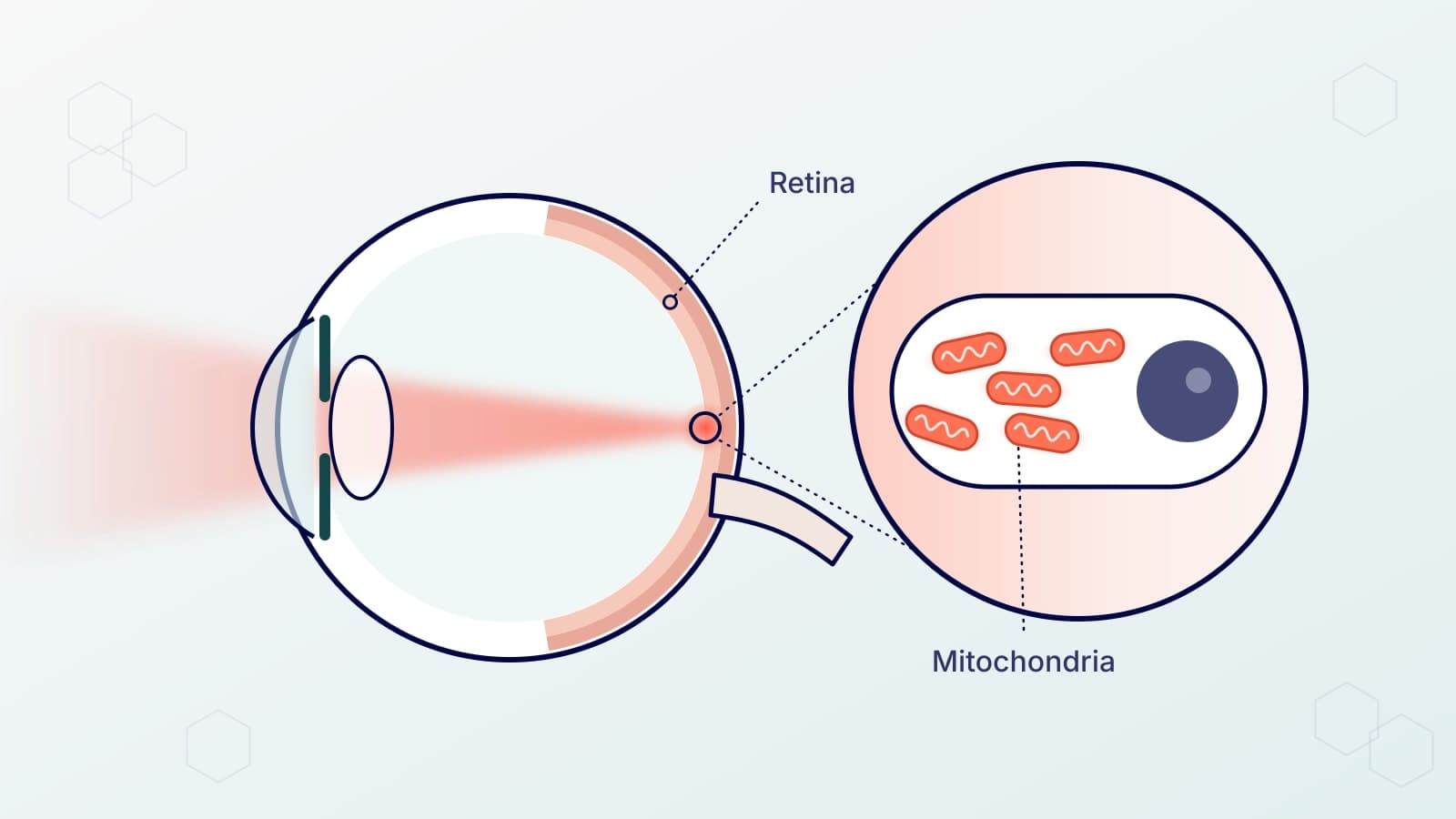
Age-related macular degeneration, or AMD, affects the macula: the small central part of the retina you use for reading, recognising faces and seeing fine detail. It comes in two forms, dry and wet. They share a name and a part of the eye, but they behave very differently, and knowing which you have changes what you should watch for.
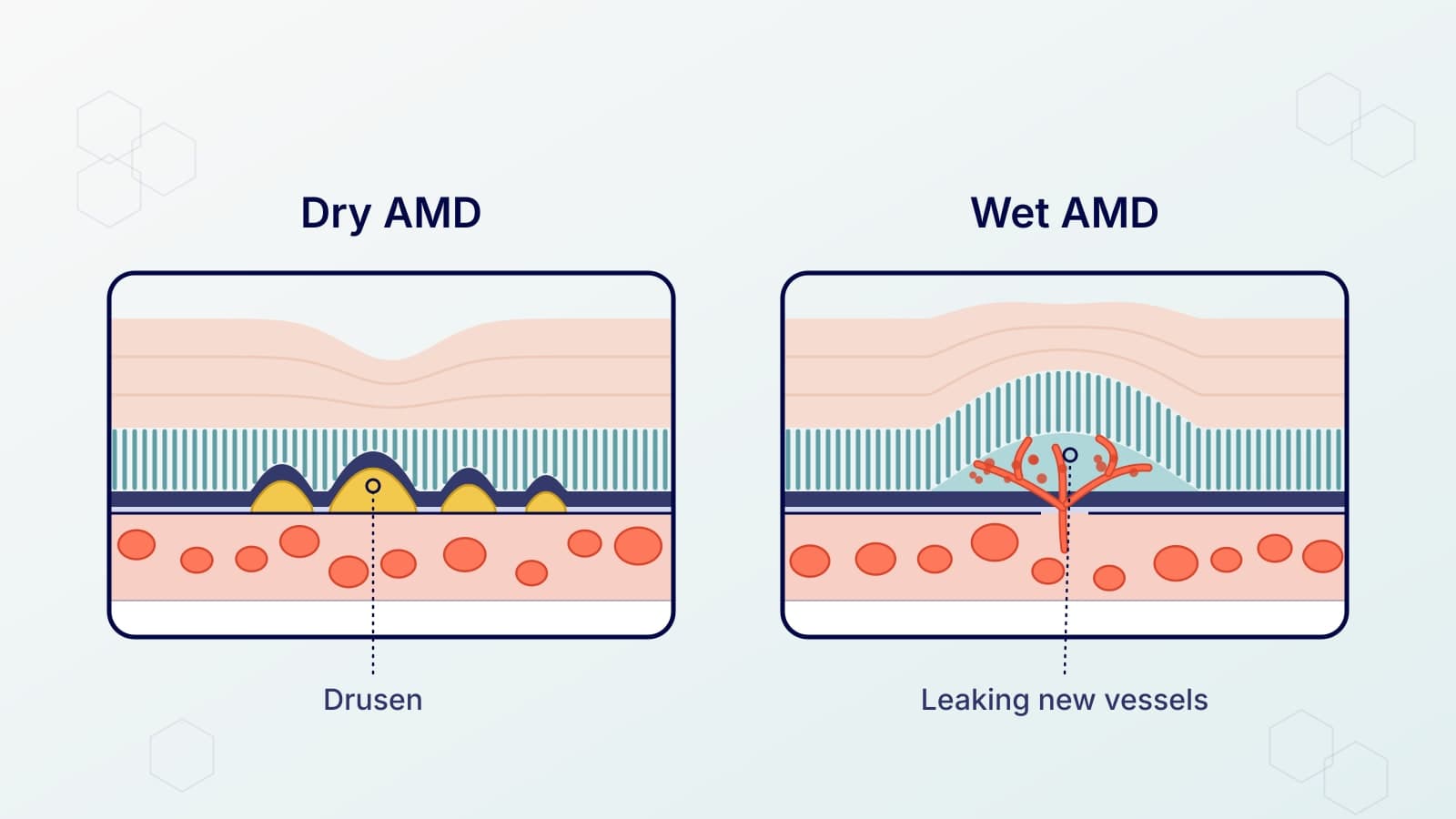
Dry AMD develops slowly. As the cells of the macula age they work less well, and waste deposits called drusen build up beneath them. Over years, central vision can become blurred or patchy, and reading or recognising faces gets harder. Some people reach a late stage called geographic atrophy, where areas of the macula thin and stop working.
Wet AMD can move quickly. It happens when abnormal blood vessels grow under the macula and leak. Straight lines can start to look wavy, and a blurred or missing patch can appear in the middle of your vision, sometimes within days or weeks.
Dry can turn into wet. Some people with dry AMD go on to develop wet AMD. The Macular Society puts it at around 10 to 15 in 100 people with late-stage dry AMD. That is why anyone with dry AMD is asked to check their vision regularly, usually with an Amsler grid: a square of straight lines with a dot in the middle.
How each is treated
Wet AMD can be treated on the NHS, usually with injections into the eye, and treatment works best when it starts early.
The NHS says there is currently no treatment for dry AMD. Care means regular checks, help with low vision, stopping smoking and, for some people with intermediate AMD, a vitamin and mineral mix known as AREDS2. Ask your optometrist or GP before starting a supplement, because they are not right for everyone.
What to do if your vision changes
If straight lines start to look wavy, or a patch of your vision blurs or goes missing, see an optometrist the same day. In Scotland you do not need to wait for a routine appointment, and NHS eye examinations are free for anyone who usually lives in the UK. If the practice is closed, phone NHS 24 on 111.
This article is for general information and is not medical advice. If you are worried about your eyes, speak to an optometrist.
Considering an assessment?
Every patient is assessed before treatment is discussed, and we will tell you if photobiomodulation is not right for you.
Arrange an assessment